 Michael Chase
 The pants hit at the ankle. The sleeves end two inches above the wrist. The blouse rides up the moment you reach for something on a high shelf. If this is your regular shopping experience, you already understand that buying clothes as a tall woman is not a sizing problem — it’s a proportions problem. And most mainstream brands still haven’t actually solved it.
This guide covers which tall women’s clothing lines are genuinely worth your time, what the measurements mean in practice, and where even the dedicated tall brands still fall short.
The Proportional Problem Regular Brands Keep Ignoring
Most women’s clothing is designed around a fit model roughly 5’4″ to 5’6″ tall. When a brand offers “tall” sizing, many simply add an inch or two to the inseam and call it done. That’s not a tall fit — it’s a regular fit with a minor tweak.
Genuine tall sizing has to address three distinct proportional issues at once: inseam length, torso length, and sleeve length. Budget brands typically fix one. Mid-range brands sometimes manage two. Only brands built specifically for tall women from the beginning consistently address all three — and even then, the execution varies significantly.
It’s Not Just the Inseam
The inseam gets most of the attention, and for good reason. A woman who is 5’10” generally needs a 32–34″ inseam depending on the cut and whether she’s wearing heels. Standard women’s jeans offer 28–30″. That’s a four-inch gap — enough to make ankle-length pants look like capris and full-length trousers look cropped.
But the rise is the part that’s harder to fix and almost never discussed. Rise is the distance from the crotch seam to the waistband. In regular women’s jeans, the rise is proportioned for a 5’4″ torso. On a 5’10” frame, those same jeans pull down in the back or sit uncomfortably low — not because of the hip measurement, but because the torso itself is longer. A mid-rise on a regular-height woman effectively becomes a low-rise on a tall one.
The Torso Problem in Tops
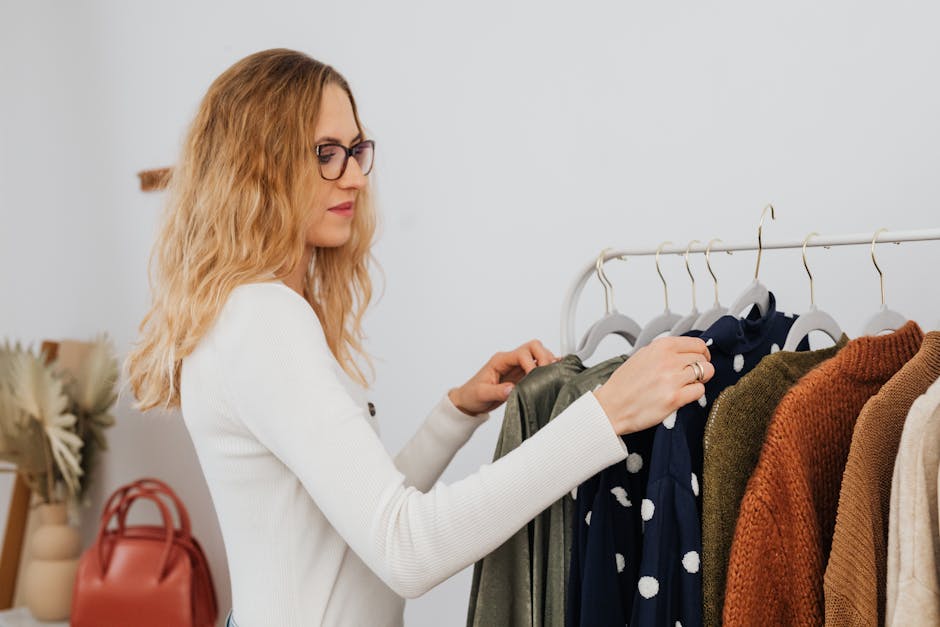
A standard-length women’s blouse is cut to sit at the hip of someone around 5’5″. On a 5’10” frame, that same top sits mid-hip at best — it won’t tuck reliably and will expose the lower back during movement. Tall-specific tops add length through the body rather than just the sleeves, which means they drape correctly and stay put.
Sleeve length is more predictable across brands. Standard women’s sleeve length runs about 23–24 inches. A 5’10” woman typically needs 25–26 inches. A 6’0″ woman may need closer to 27 inches. Tall versions of blazers and coats add 1–2 inches to the sleeve — which sounds like a small adjustment but makes a visible difference the moment you put on a jacket.
Why Formal Wear Is the Hardest Category
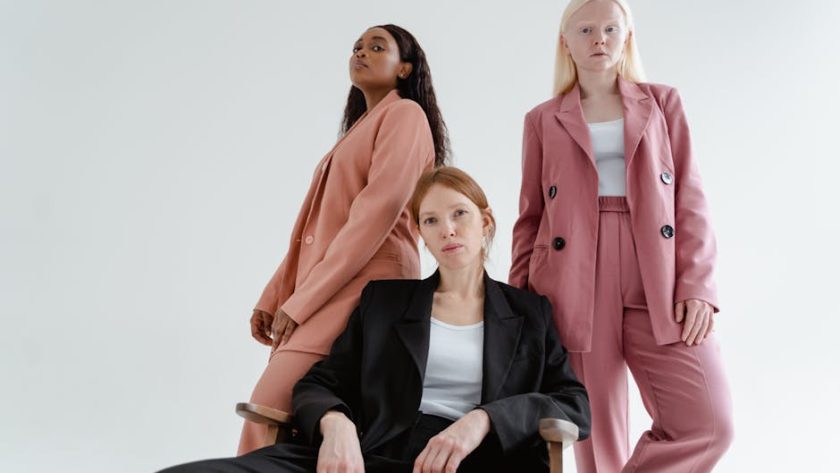
You can hem a pair of trousers shorter. You cannot add length to a blazer sleeve without a full reconstruction. This is why tailored pieces — blazers, coats, structured dresses — are where the absence of genuine tall sizing hurts most. Buying a regular blazer in a larger size to get enough arm length results in a garment that’s too wide in the shoulders. Tall-specific suiting from Long Tall Sally and Banana Republic’s tall range solves this because the sleeve is cut longer from the start, not extended as an afterthought.
Jumpsuits and rompers fall into the same category. The crotch-to-shoulder distance on a regular jumpsuit makes it genuinely unwearable for most women over 5’8″. Tall-specific versions extend the torso section, not just the legs, which is why brands that genuinely invest in tall sizing will list both measurements separately.
Tall Women’s Clothing Lines: What the Numbers Actually Say

The brands below represent the most accessible tall-specific options, with the actual sizing numbers that determine whether something will fit. Price ranges reflect typical full-price items, not sale.
| Brand | Designed For | Inseam Range | Price Range | Best For |
|---|---|---|---|---|
| Long Tall Sally | 5’8″+ | 29–37″ | $30–$150 | Full wardrobe, formal pieces, rare sizes |
| ASOS Tall | 5’9″+ | 32–36″ | $20–$80 | Trend-led basics and everyday wear |
| Alloy Apparel | 5’9″+ | 33–37″ | $15–$70 | Budget jeans and casual bottoms |
| Banana Republic Tall | 5’9″+ | 32–34″ | $60–$200 | Office wear and tailored pieces |
| American Eagle Tall | 5’9″+ | 33–37″ | $40–$90 | Casual jeans, Ne(x)t Level line |
| J.Crew Tall | 5’9″+ | 32–35″ | $50–$175 | Classic basics and weekend wear |
| Athleta Tall | 5’9″+ | 31–34″ | $60–$130 | Activewear with extended rise |
| Gap Tall | 5’9″+ | 32–35″ | $30–$90 | Affordable basics, good on sale |
One thing the table doesn’t capture: inseam availability varies by style within the same brand. American Eagle’s Ne(x)t Level Jeans in tall regularly stock a 37″ inseam. Their dress pants tall line caps at 34″. Always check the specific style’s inseam number before buying, not just the brand category.
Also worth noting: Alloy Apparel’s price-to-inseam ratio is unmatched in the budget category. Their jeans with 35–37″ inseams start under $30. The trade-off is that fit quality is less consistent than Long Tall Sally, and returns can be more complicated outside the US.
Long Tall Sally vs. ASOS Tall: The Real Answer
For a tall woman who needs fit consistency and hard-to-find pieces like tall blazers, occasion dresses, or properly proportioned jumpsuits, Long Tall Sally is the better choice. For trend-driven everyday wear under $50, ASOS Tall wins outright.
What Long Tall Sally Does Better
Long Tall Sally has been making clothes specifically for tall women since 1976. That’s not a marketing detail — it shows in the construction. Their torso length adjustments are more thorough than ASOS Tall, meaning tops and dresses actually account for the full body length of a 5’11″+ frame, not just the legs. The inseam range goes up to 37 inches across most categories, which reliably covers women up to about 6’2″.
Formal and workwear options are where the difference is most apparent. Long Tall Sally stocks tall blazers, structured trousers, and occasion dresses in a range that ASOS Tall simply doesn’t match. For women who need suiting for work or formal events, there’s no realistic budget alternative that comes close to the selection.
The downside: the aesthetic skews classic and conservative. If you want fashion-forward or trend-led styles, the selection can feel limited. Prices reflect the specialization — most tops run $40–$80 and dresses from $60–$120.
What ASOS Tall Does Better
ASOS Tall’s advantage is sheer volume. At any given time, hundreds of tall-specific options are available across every current trend cycle — wide-leg trousers, oversized blazers, midi dresses, co-ords. Prices are lower, and stock turns over quickly. For a tall woman who wants to shop current styles without paying Long Tall Sally prices for casual pieces, ASOS Tall is the practical answer.
The trade-off is inconsistency. Fit quality varies noticeably from style to style within the ASOS Tall range. Some pieces genuinely address the full proportional difference. Others feel like two inches were added to a regular inseam and that was the extent of the work. Reading specific fit reviews and checking the listed inseam measurement per item is essential, not optional.
What to Check Before Ordering from a Tall Line
What inseam length do I actually need?
A practical guide: subtract about 28 inches from your height for a cropped fit, 30 inches for ankle length, and 32 inches for full-length. At 5’9″ (69 inches), you’re looking for a 33–37″ inseam depending on the silhouette. At 5’11” (71 inches), you need 35–39″, which eliminates most Gap Tall and J.Crew Tall options and points you toward Long Tall Sally or American Eagle’s Ne(x)t Level Jeans, which reliably stock 37″ inseams.
Does torso length matter as much as inseam?
For bottoms: the inseam is the primary number. For tops, dresses, and jumpsuits: yes, and it’s harder to measure objectively. The practical test is what happens when you raise your arms — if a regular-length top exposes your lower back, you need a tall top regardless of what the size chart says. For dresses, check where the waist seam falls on the model in product photos. If the model’s height isn’t listed, that’s useful information in itself: brands that care about tall fit tend to be transparent about it.
Should I measure differently for activewear?
For leggings and workout tights, the rise measurement matters as much as the inseam. A low-rise legging on a tall frame requires constant readjustment during any movement involving bending or stretching. Athleta Tall and Girlfriend Collective Tall both adjust the rise alongside the leg length — look for brands that list both measurements separately in the product specs. A brand listing only inseam for their “tall” activewear is almost certainly only addressing leg length.
Where Tall Sizing Still Consistently Falls Short
Swimwear remains the most underserved category in tall clothing, even among brands that do everything else well. A one-piece suit has to accommodate the full torso length simultaneously — a garment cut for a 5’5″ frame will pull uncomfortably at the crotch or gap at the bust on a 5’10” woman regardless of cup-size adjustments. Long Tall Sally’s swimwear range is one of the few that addresses this, but the style selection is deliberately narrow. Formal gowns present the same issue: most tall women planning a wedding or black-tie event still order a standard gown and pay for extensive alterations, because even the best tall-specific lines don’t stock enough formal variety to make it a reliable one-stop option.
Tall Shopping Mistakes That Cost Real Money
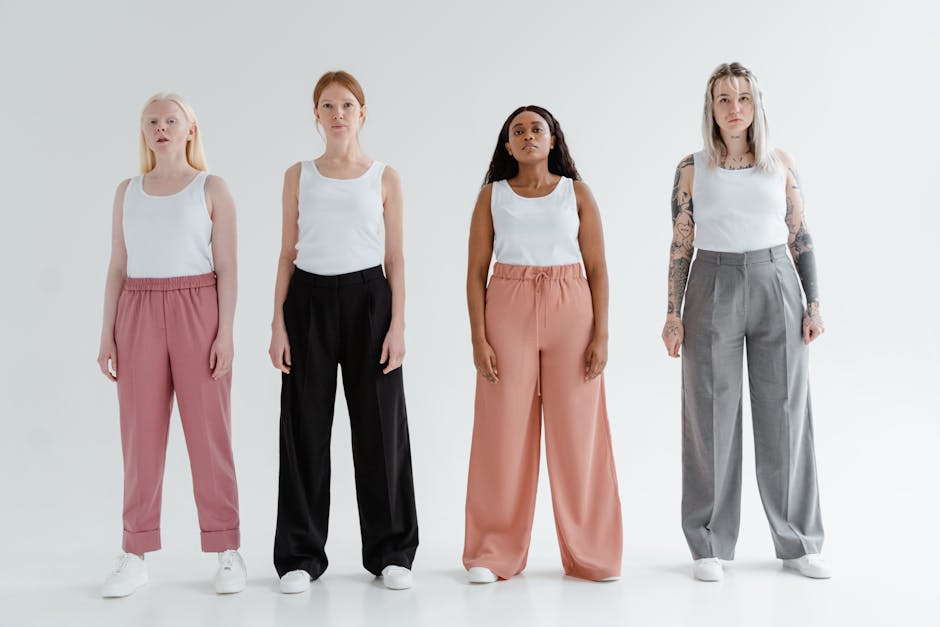
- Sizing up to get more length. This is the most expensive and most common mistake. A size 14 doesn’t have a longer inseam than a size 10 — it has a wider hip and waist measurement. Sizing up adds width everywhere but adds zero length to the leg or torso.
- Trusting the “tall” label without verifying the inseam number. Some brands label any inseam over 30″ as tall. At 5’10”, you likely need 33–35″ at minimum. Always find the specific number on the product page, not just the category designation.
- Ignoring torso length when buying dresses. A dress can have the correct total hemline length and still fit incorrectly if the waist seam sits three inches below your natural waist. Check waist seam placement in photos rather than relying on overall dress length alone.
- Assuming “tall activewear” from a mainstream brand equals genuinely proportioned tall activewear. Many mainstream brands offer tall leggings that have only extended the leg. On a long-torso body, the waistband still sits too low. Athleta Tall and Girlfriend Collective Tall both adjust the rise — confirm this before buying rather than assuming.
- Ignoring return policies before trying a new brand. Tall sizing involves more trial and error than regular sizing. Favor brands with free or easy returns — ASOS Tall, Gap Tall, Banana Republic Tall — when testing a new label for the first time. A cheap item from a brand with a difficult return process isn’t actually cheap if it doesn’t fit and can’t go back.
- Writing off an entire brand after one bad style experience. Fit consistency varies within tall lines, not just between them. A specific cut that didn’t work is not evidence that the brand’s other silhouettes won’t. Check the inseam and rise numbers on each specific style rather than assuming brand-level consistency throughout.
| What You Need | Best Option |
|---|---|
| Full wardrobe with consistent proportional fit | Long Tall Sally |
| Trend pieces and everyday basics under $50 | ASOS Tall |
| Affordable jeans with 35–37″ inseam | Alloy Apparel or American Eagle Tall |
| Office and tailored workwear | Banana Republic Tall |
| Activewear with extended rise and leg | Athleta Tall or Girlfriend Collective Tall |
| Classic basics at a mid-price point | J.Crew Tall |