 Michael Chase
 The fundamental physics of heat retention in cold-weather apparel revolves around a singular concept: the management of stagnant air. In the context of the best quilted puffer jacket, the garment functions not by generating heat, but by creating a high-loft boundary layer that prevents the body’s kinetic thermal energy from dissipating into the environment. While the aesthetic silhouette of a puffer is often the primary driver of consumer interest, the technical efficacy of the jacket is determined by the complex interplay between baffle geometry, the volumetric expansion of the fill, and the air permeability of the shell. Understanding these variables is essential for anyone seeking a garment that offers more than just a visual approximation of warmth.
What defines a high-performance quilted puffer jacket?
The primary function of quilting in a puffer jacket is to stabilize the insulation. Without these stitched compartments, gravity would cause the fill—whether natural down or synthetic clusters—to settle at the bottom of the garment, leaving the shoulders and chest exposed to the cold. However, the method of quilting introduces a compromise. Most consumer-grade quilted jackets use a “stitch-through” construction. In this process, the outer shell and inner lining are sewn together to create the pockets. While this reduces weight and manufacturing costs, it creates “cold spots” along every seam where the insulation is compressed to zero thickness. This is the most common failure point in budget-friendly jackets, where the wind can penetrate the stitch lines regardless of how much down is inside the baffles.
High-performance jackets intended for extreme conditions often utilize box-wall construction. In this more complex method, vertical strips of fabric (baffles) are sewn between the shell and lining, creating three-dimensional cubes. This allows the insulation to loft fully even at the seams, effectively eliminating the cold spots inherent in stitch-through designs. For most urban and light outdoor use, stitch-through quilting is sufficient, provided the baffles are sized correctly. Micro-quilting—characterized by very small, frequent stitched patterns—is excellent for mid-layers because it keeps the jacket low-profile and prevents the “marshmallow” look. Conversely, larger baffles allow for more loft and higher warmth-to-weight ratios but can lead to uneven distribution if the fill quality is low. When evaluating the best quilted puffer jacket, the density of the quilting should match the intended activity level; tighter quilting is generally better for high-movement tasks, while larger baffles are superior for static warmth in sub-zero environments.
How do down and synthetic insulation compare in quilted designs?

The choice of insulation material significantly impacts the longevity and maintenance requirements of a quilted jacket. Down, sourced from geese or ducks, remains the industry standard for warmth-to-weight efficiency. It is measured by fill power (FP), which represents the volume in cubic inches that one ounce of down occupies. An 800-fill power jacket will be significantly warmer and more compressible than a 600-fill power jacket of the same weight. However, down is naturally hydrophilic. When exposed to moisture, the clusters collapse, losing their ability to trap heat. This is why many modern quilted jackets now feature “hydrophobic down,” which is treated with a molecular-level polymer to resist water saturation and speed up drying times.
Synthetic insulation, typically made from polyester filaments, mimics the structure of down but maintains its loft when wet. While synthetics have historically been heavier and less compressible, advancements like PrimaLoft Gold and Arc’teryx’s Coreloft have narrowed the gap. Synthetic insulation is often preferred for high-output activities where sweat is a factor, as it continues to insulate even when damp. In a quilted format, synthetic sheets are less prone to “leaking” through the seams than down feathers, as the fibers are often continuous or bonded. Below is a comparison of the technical trade-offs between the two primary insulation types found in top-tier quilted jackets.
| Feature | Down Insulation | Synthetic Insulation |
|---|---|---|
| Warmth-to-Weight | Excellent (especially 800+ FP) | Good (improving) |
| Wet Performance | Poor (unless treated) | Excellent |
| Compressibility | Superior | Moderate |
| Durability | High (can last decades) | Moderate (fibers break down) |
| Maintenance | Complex (requires specific drying) | Simple (machine washable) |
Best quilted puffer jackets for extreme cold
When temperatures drop well below freezing, the volume of insulation becomes the most critical factor. The The North Face 1996 Retro Nuptse (Approx. $330) remains a dominant choice for this category. It utilizes large, horizontal baffles filled with 700-fill power goose down. The oversized quilting allows the down to expand significantly, creating a thick thermal barrier. The shell is constructed from a 40D ripstop nylon, providing enough durability for daily urban use. The primary drawback is its boxy silhouette, which may not layer well under a hard shell, and its lack of technical features like a helmet-compatible hood.
- Pros: Exceptional loft, iconic heritage style, durable 40D shell.
- Cons: Boxy fit, non-adjustable hood, heavy compared to technical alpine gear.
- Specs: 700-fill down, DWR finish, stowable hood, 685g average weight.
For those seeking a more refined, technical option for extreme cold, the Canada Goose Crofton Hoody (Approx. $950) offers a significant upgrade in materials. Despite the high price point, the Crofton is notable for its 750-fill power white duck down and ultra-lightweight Recycled Feather-Light Ripstop fabric. The quilting pattern is narrower than the Nuptse, which provides a more tailored fit while maintaining high heat retention. It is rated for temperatures as low as -15°C (5°F). However, the high cost is difficult to justify purely on performance metrics, as much of the price reflects the brand’s manufacturing in Canada and luxury positioning. For pure utility, the Nuptse provides comparable warmth for a third of the price, though it lacks the Crofton’s packability and sophisticated finish.
- Pros: Packable into internal pocket, backpack straps for hands-free carry, sustainable materials.
- Cons: Extremely high price point, 15D shell is prone to snags.
- Specs: 750-fill duck down, TEI 2 rating, recycled nylon shell.
Top-rated lightweight quilted puffers for layering
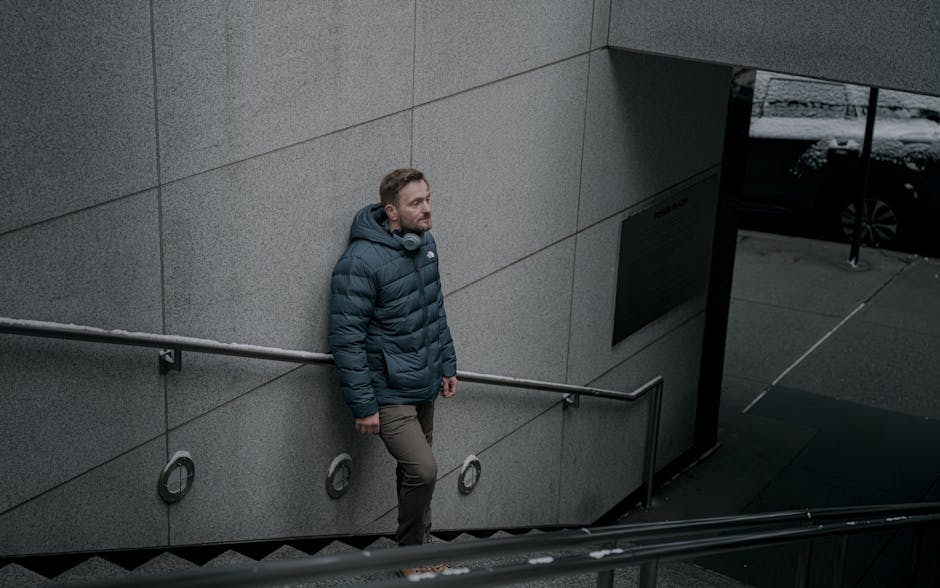
For high-intensity activities or transitional seasons, a lightweight quilted jacket is more versatile. The Patagonia Down Sweater (Approx. $279) is widely considered the benchmark in this category. It features 800-fill power Advanced Global Traceable Down and a shell made from NetPlus recycled nylon. The horizontal channel quilting is precisely spaced to prevent down migration without adding unnecessary bulk. It is light enough to serve as a mid-layer under a waterproof shell but substantial enough to be a standalone piece in 40°F weather. A common criticism is the zipper durability, which some users find prone to snagging on the interior storm flap.
- Pros: Ethical down sourcing, excellent warmth-to-weight, high resale value.
- Cons: Zipper snags easily, fit can be slightly baggy in the torso.
- Specs: 800-fill down, 20D NetPlus shell, 368g weight.
An alternative for those prioritizing weight is the Arc’teryx Cerium Hoody (Approx. $400). Arc’teryx utilizes a technique called “Down Composite Mapping,” where 850-fill power down is used in the core and sleeves, while synthetic Coreloft is placed in areas prone to moisture, such as the cuffs, collar, and underarms. The quilting is extremely fine, resulting in a jacket that weighs only 335 grams (11.8 oz). The 15D Arato shell fabric is remarkably thin to save weight, which makes it vulnerable to tears if used without an outer layer in rugged environments. If your priority is the highest warmth-to-weight ratio for backcountry use, the Cerium is the superior technical choice. For general daily wear, the Patagonia’s thicker shell offers better longevity.
- Pros: Best-in-class warmth-to-weight, hybrid insulation for moisture management, articulated fit.
- Cons: Delicate shell fabric, expensive, trim fit may not accommodate thick base layers.
- Specs: 850-fill down + Coreloft synthetic, 15D Arato shell, 335g weight.
The denier (D) of a jacket’s shell fabric indicates the thickness of the fibers. A 10D or 15D shell is extremely light and packable but will tear easily. For a jacket that needs to withstand daily commuting or contact with abrasive surfaces, look for a shell with at least 30D or 40D reinforcement.
Assessing the durability of different quilting patterns
Quilting patterns are not just for show; they dictate how the jacket handles wear and tear. Horizontal channel quilting is the most common and generally the most efficient for heat retention because it allows for long, continuous plumes of down. However, it can occasionally lead to “clumping” at the ends of the channels if the jacket is stored compressed. Diamond quilting, often found in heritage brands like Barbour or Lavenham, offers superior structural stability. The intersecting seams act as a grid that locks the insulation in place, making it less likely to shift during vigorous movement. The trade-off is that diamond quilting typically uses thinner insulation and has more stitch lines, which increases the number of potential cold spots and points of water ingress.
Micro-baffle quilting (small squares or rectangles) has become popular in the “puffer sweater” category. This design is highly effective at maintaining a consistent thickness of insulation across the entire body. It prevents the “sagging” effect that can occur in larger baffles over years of use. However, the high density of stitching means there is more thread exposed to the elements. If a single thread snags and unravels, it can compromise the entire baffle. When selecting a jacket, examine the stitch density. A higher number of stitches per inch (SPI) generally indicates a more durable construction that is less likely to leak down feathers. Look for reinforced stitching at high-stress points like the armpits and pockets.
In recent years, bonded baffles or “sonic welding” have emerged as a high-tech alternative to traditional stitching. In this process, the shell and lining are fused together using heat or radio frequency, creating a seam without a needle ever piercing the fabric. This significantly improves the jacket’s windproof and waterproof capabilities because there are no stitch holes for air or moisture to enter. While more expensive to manufacture, bonded quilting is the gold standard for technical alpine puffers where maximum weather protection is required.
The Engineering of Shell Fabrics: Denier and Breathability

The shell of a quilted jacket is its first line of defense, but it also determines how the jacket feels and performs over time. Most high-end puffers use ripstop nylon, a fabric woven with a crosshatch pattern of reinforcement threads. This ensures that if a small puncture occurs, the tear is contained within a single “square” of the weave. The balance between denier and breathability is a constant challenge for designers. A high-denier shell (40D-70D) is rugged and windproof but can feel stiff and lack breathability, leading to a “clammy” sensation if you start to overheat. Conversely, ultra-light shells (7D-15D) allow the down to loft more freely, resulting in a warmer jacket for its weight, but they offer almost no protection against abrasion.
Furthermore, the application of DWR (Durable Water Repellent) is critical. DWR is a chemical coating that causes water to bead up and roll off the surface of the fabric rather than soaking in. Without a functional DWR coating, the shell fabric “wets out,” which blocks the breathability of the fabric and allows moisture to reach the insulation. Many modern brands are moving toward PFC-free DWR treatments to reduce environmental impact, though these often require more frequent re-application than older, fluorinated versions. When choosing a jacket, consider whether you will be using it as an outer layer (requiring higher denier and DWR) or a mid-layer (where breathability and low denier are more beneficial).
How to maintain and wash a quilted puffer jacket
The longevity of a quilted puffer jacket is almost entirely dependent on proper maintenance. A common mistake is washing these garments with standard laundry detergent. Traditional detergents contain surfactants that strip the natural oils from down and the DWR coating from the shell. This causes the insulation to become brittle and lose its loft. Instead, use a specialized technical wash such as Nikwax Down Wash Direct or Grangers 2-in-1. These products clean the fabric while maintaining the loft and water-repellency of the fill.
Drying is the most critical stage of the process. A quilted jacket must be dried in a tumble dryer on low heat. Never air-dry a down jacket. Air-drying allows the wet down clusters to clump together, and once they dry in that state, the jacket will lose its thermal properties permanently. To prevent clumping, place three clean tennis balls or specialized dryer balls in the machine with the jacket. The balls physically break up the down clumps as the jacket rotates. This process can take several hours; it is essential to continue drying until no small lumps can be felt through the fabric. For storage, always hang the jacket on a wide hanger in a cool, dry place. Compressing a quilted jacket into a small stuff sack for long periods will eventually damage the structure of the insulation, reducing its ability to trap air. Following these technical steps can extend the lifespan of a high-quality puffer from three years to over a decade.
Common Mistakes When Purchasing a Puffer
Many consumers prioritize the “look” of a puffer without considering the functional geometry of the baffles. One of the most frequent mistakes is buying a jacket that is too tight. Insulation requires space to loft; if the jacket is compressed against your body by a tight fit, the air pockets cannot form, and the thermal efficiency drops significantly. Always ensure there is enough room for a base layer or a light sweater underneath without feeling restricted in the shoulders.
Another mistake is ignoring the hood design. On technical quilted jackets, the hood should be adjustable at the back and sides. A non-adjustable hood will often blow off in high winds or obscure your peripheral vision. Similarly, check the hem adjusters. Being able to cinch the bottom of the jacket is vital for trapping heat and preventing “chimney effect,” where cold air is sucked up from the bottom as warm air escapes through the collar. Finally, don’t assume a higher price always means more warmth. A $900 fashion-forward puffer often has less actual insulation than a $300 technical jacket designed for mountaineering. Always check the fill weight (the actual amount of down in grams) in addition to the fill power.
Technical Comparison of Top Quilted Jackets
| Model | Fill Power | Shell Denier | Weight (g) | Best Use |
|---|---|---|---|---|
| TNF 1996 Retro Nuptse | 700 FP | 40D | 685 | Urban Cold / Lifestyle |
| Canada Goose Crofton | 750 FP | 15D | N/A | Travel / Luxury Casual |
| Patagonia Down Sweater | 800 FP | 20D | 368 | All-around / Everyday |
| Arc’teryx Cerium | 850 FP | 15D | 335 | Alpine / Backcountry |
Sustainability and Ethics: Understanding RDS and Recycled Fills
As the fashion industry faces increasing scrutiny over its environmental footprint, the sourcing of insulation has become a primary concern for high-end brands. The Responsible Down Standard (RDS) is now a baseline requirement for any reputable quilted jacket. This certification ensures that the down used was not harvested from live-plucked or force-fed birds. Brands like Patagonia have gone further by using “Global Traceable Down,” which tracks the supply chain from the parent farm to the final garment factory to ensure the highest animal welfare standards.
Recycled insulation is also gaining traction. Recycled down is typically reclaimed from old pillows and comforters, then cleaned and sorted by fill power. While it can be slightly less consistent than virgin down, it significantly reduces waste. In the synthetic realm, brands are increasingly using post-consumer recycled polyester (often from plastic bottles) to create high-loft fills. Choosing a jacket with recycled content or ethical certifications doesn’t just benefit the environment; it often correlates with a higher overall build quality, as brands that invest in ethical sourcing tend to also invest in superior construction methods and longevity.