 Michael Chase
Wondering what to wear when you need to look capable, polished, and fully in control? The best power outfit combinations use clean lines, deliberate contrast, and one memorable detail. You do not need a full suit every day. You need the right balance of structure, comfort, and context.
Which Power Outfit Formula Fits the Room?
Start with the setting before choosing the clothes. A board meeting, client presentation, creative office, and first-day introduction all call for different levels of structure. Use this quick chart to match the outfit’s shape and color to the message you want to send.
Match structure to the level of authority
| Work setting | Best outfit formula | Color direction | Shoe choice |
|---|---|---|---|
| Board meeting | Matching blazer and trouser suit with a fine-knit top | Navy, charcoal, or deep brown | Pointed pump or polished loafer |
| Client presentation | Single-breasted blazer, straight trousers, and a tucked shirt | Navy with white, cream, or pale blue | Low block heel or leather loafer |
| Business-casual office | Relaxed blazer, tailored pants, and a smooth T-shirt | Black, camel, olive, or soft gray | Minimal sneaker or flat loafer |
| Creative workplace | One structured piece with a sculptural skirt or wide-leg trouser | One saturated accent with neutrals | Square-toe flat or ankle boot |
| First-day introduction | Blazer, matching-color knit, and ankle-length trousers | Medium navy, gray, or chocolate | Closed-toe flat with a clean finish |
Use one visual signal at a time
The strongest choice for a high-stakes meeting is the board-meeting formula: a dark suit, light knit, and simple shoe. It creates a clear vertical line and keeps attention on your face. For a less formal workplace, loosen only one element. Keep the blazer structured while switching to a T-shirt, or keep the trousers sharp while wearing a soft cardigan. Changing every element at once makes the outfit look accidental.
How Do You Look Powerful Without Looking Overdressed?
Start with a strong shoulder and a clean hem
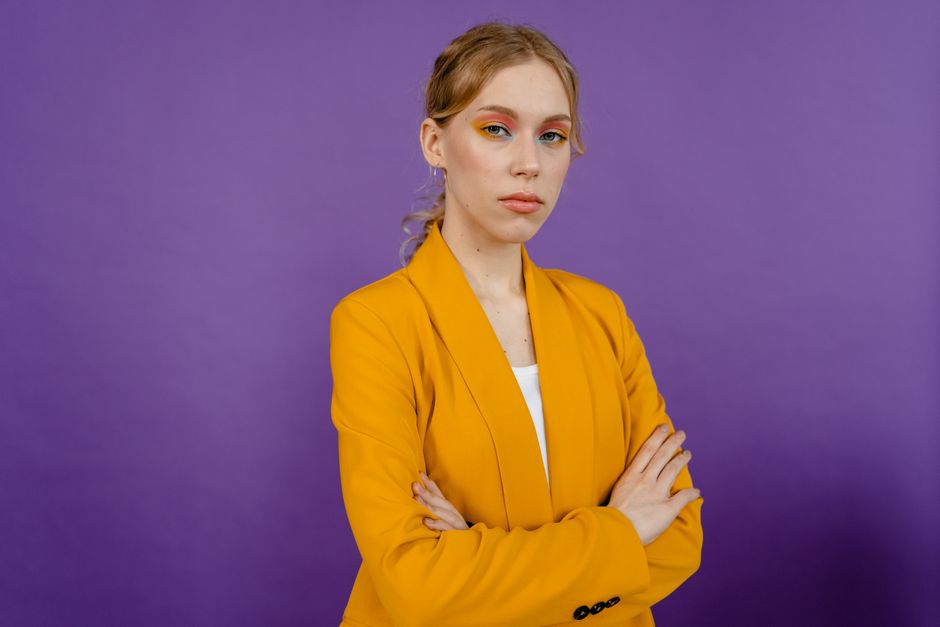
My most reliable rule is simple: choose one garment with visible structure, then let the rest of the outfit stay quiet. A blazer with a defined shoulder gives the upper body shape, while trousers that skim rather than cling create a long, calm line. Check the shoulder seam first. It should sit at the edge of your shoulder, not halfway down your arm. The sleeve should finish near the wrist bone, leaving enough room for a watch or a narrow bracelet. Trousers should break lightly over the shoe, with no pile of fabric around the ankle. These small measurements make an inexpensive outfit look intentional.
Build contrast around your face
Use a light shirt or knit under a dark jacket when you need a sharper impression. The contrast frames your face and prevents black tailoring from looking flat. A cream top feels softer than bright white, while pale blue looks crisp without the severity of stark contrast. Keep the neckline open by one or two buttons, or choose a shallow V-neck to create breathing room. Skip several competing accessories. One metal watch, medium-size earrings, or a narrow belt is enough. The clear winner for everyday authority is a dark jacket, lighter top, straight trouser, and one polished accessory.
What Fit Mistakes Weaken a Professional Outfit?
Most power outfits fail at the fitting room, not in the styling process. Use this five-point check before buying or tailoring anything.
Run this fit check before removing the tags
- Watch the button strain. Close the blazer while standing naturally. If the button pulls into an X shape, size up or choose a roomier cut.
- Check the arm lift. Raise both arms and reach forward. A jacket that locks your shoulders will become uncomfortable before lunch.
- Inspect trouser pockets. If the pocket opening gapes, the seat or hip is too tight. Tailoring the waist will not fix excess pressure across the hips.
- Measure the hem against the shoe. Cropped trousers should show a small section of ankle. Full-length trousers should not pool more than one soft fold.
- Test the fabric in daylight. Thin lining, shiny stress points, and transparent pale trousers often appear only outside the store’s bright lights.
Know when tailoring beats shopping
A good tailor can shorten sleeves, adjust a trouser hem, and take in a waistband, but major shoulder changes are expensive and risky. Do not buy a blazer with the wrong shoulder seam because the sale price looks attractive. Also avoid trousers that feel tight while seated; workwear must survive a commute, a long meeting, and a full day at a desk. The best power outfit is the one that still looks smooth after eight hours of movement.
Which Pieces Make the Strongest Power Outfit?
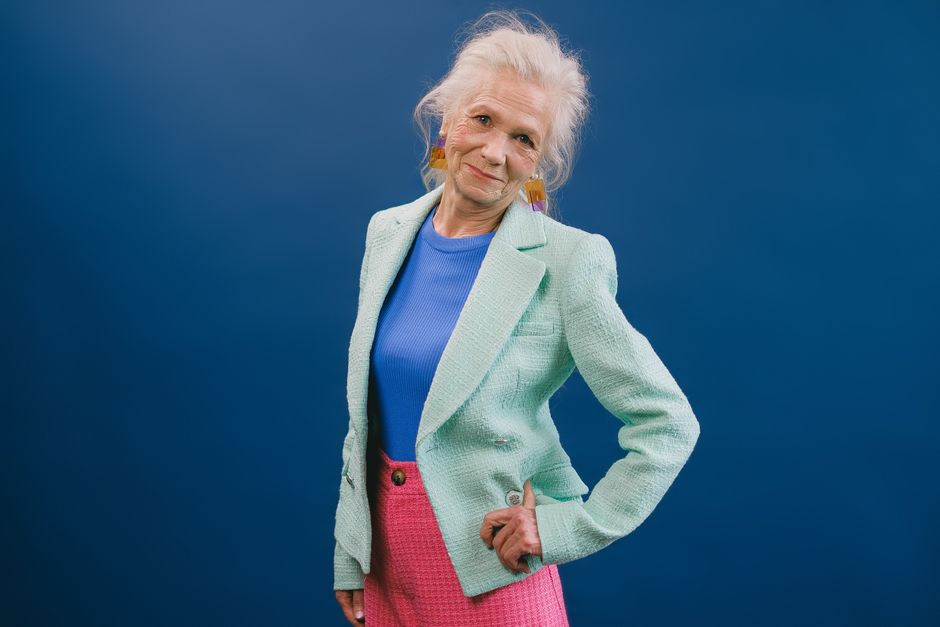
Choose the blazer first, then build around its shape. That decision gives the outfit a clear anchor and prevents random shopping. Product examples can help you judge quality and proportion, even when you buy similar pieces secondhand or from another label.
Pick a blazer with enough weight to hold its shape
The Theory Good Wool blazer, often listed around $595, is the strongest premium reference for a clean, office-ready line. Its wool construction has enough body for presentations and formal meetings. For a lower price, the J.Crew Parke blazer, commonly priced near $298, offers a more relaxed shape that works with jeans as well as tailored trousers. The COS wool blazer, often around $250, is the best choice for a modern wardrobe with slightly roomier proportions. My pick for a traditional corporate setting is Theory because the sharper structure reads most clearly from across a conference table. Choose COS for a creative office where a less fitted silhouette feels current.
Balance the jacket with a simple bottom half
Pair a structured blazer with a plain base: a fine-gauge knit, smooth cotton shirt, or matte shell. The Uniqlo Smart Ankle Pants, usually around $49.90, are a practical option for testing a cropped trouser proportion without a large budget. Keep the top close to the body if the jacket is roomy. If the jacket is fitted, wide-leg trousers can add balance. Avoid matching a padded shoulder with a very tight pencil skirt unless the outfit has enough ease to let you walk and sit comfortably. For the clearest power combination, choose a navy blazer, ivory top, charcoal trouser, and black leather shoe.
How Should You Adapt a Power Outfit for Different Workdays?
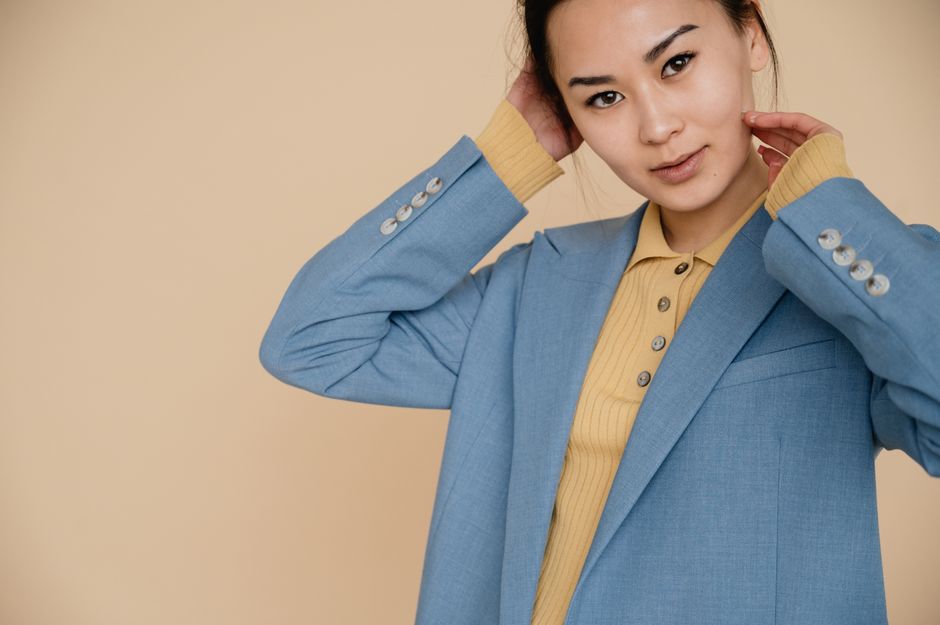
Power dressing works best when it responds to the day instead of becoming a costume. Use these questions to adjust the same core pieces without repeating the exact outfit.
What should you wear for a presentation?
Wear the most structured version: dark blazer, straight trousers, light top, and a closed-toe shoe. Keep the color contrast near the face and remove anything that may distract during gestures, such as oversized rings or a noisy bracelet. The Sam Edelman Loraine loafer, usually priced around $150, is a strong choice when you need a polished shoe without a high heel. Its loafer shape looks deliberate with ankle trousers and gives a suit a less rigid finish. For a presentation, the winning combination is navy tailoring, a cream knit, and a black or burgundy loafer.
What should you wear for a normal office day?
Drop one formal element. Wear the blazer with dark denim, or wear tailored trousers with a fine cardigan instead of a jacket. Keep the colors close in value so the outfit still looks pulled together. Add a belt if the top and bottom need a visual bridge. Do not force a suit on a day filled with errands, commuting, or casual team work; discomfort will show in your posture. The best everyday version is a relaxed blazer, ankle trousers, a tucked knit, and flat loafers. It looks professional at 9 a.m. and still feels practical at 6 p.m.