 Michael Chase
 It is a mistake. A common one, but a mistake nonetheless. Most people assume that formal attire is a monolithic category, a singular destination on a style map that leads directly to a floor-sweeping gown and a clutch that barely fits a lipstick. This misconception often results in women arriving at events feeling either drastically overdressed or, more painfully, underdressed for the specific nuances of the occasion. Formal attire is not a fixed point; it is a spectrum of requirements dictated by time, venue, and professional hierarchy. After analyzing the current landscape of high-end textiles and garment construction, it becomes clear that the best formal attire for women in 2026 is defined by structural integrity and fabric performance rather than just aesthetic appeal.
What are the distinct tiers of formal dress codes for women?
To navigate the world of formal wear, one must first dismantle the idea that “formal” always means “black tie.” The research suggests that the modern formal landscape is divided into four primary segments: White Tie, Black Tie, Business Formal, and Semi-Formal. Each of these requires a different approach to silhouette and material. White Tie remains the most rigid, demanding full-length ball gowns and, historically, opera gloves. It is rare, reserved for state dinners and the most prestigious galas, but it represents the ceiling of formality. When you step down into Black Tie, the options expand, yet the expectation remains focused on floor-length hemlines and luxury fabrics like silk, velvet, or high-grade lace.
Business Formal is where many women struggle. This is not the casual blazer you wear to a Tuesday morning meeting; this is the attire for boardrooms, courtrooms, and high-stakes negotiations. The best formal attire in this category focuses on the “power suit” or the structured sheath dress. The trade-off here is between comfort and presence. A suit with high-twist wool provides a crispness that commands respect, but it requires precise tailoring to avoid looking like a costume. Finally, Semi-Formal (often confused with Cocktail) allows for shorter hemlines—typically midi or knee-length—but maintains a high level of fabric quality. Understanding these tiers is the baseline for any successful wardrobe investment.
The Nuance of Creative Black Tie
In recent years, the “Creative Black Tie” designation has gained traction in fashion circles. This is perhaps the most difficult code to master because it invites personality without discarding the formal requirement. For women, this might mean a tuxedo-style jumpsuit or a gown with unconventional textures like metallic weaves or architectural ruffles. The key is maintaining the “weight” of the look. If the garment lacks structural substance, it will fail the formal test, regardless of its price tag.
Evaluating high-end evening gowns for black-tie and gala events

When selecting a gown for a black-tie event, the focus should be on the drape and the internal construction of the bodice. A gown that looks stunning on a hanger can often collapse when worn if it lacks the necessary boning or interfacing. After reviewing several luxury labels, two brands consistently stand out for their technical execution: Safiyaa and Galvan London. These brands represent different philosophies of formal wear, but both prioritize the physical presence of the wearer.
Safiyaa Hallie Gown Analysis
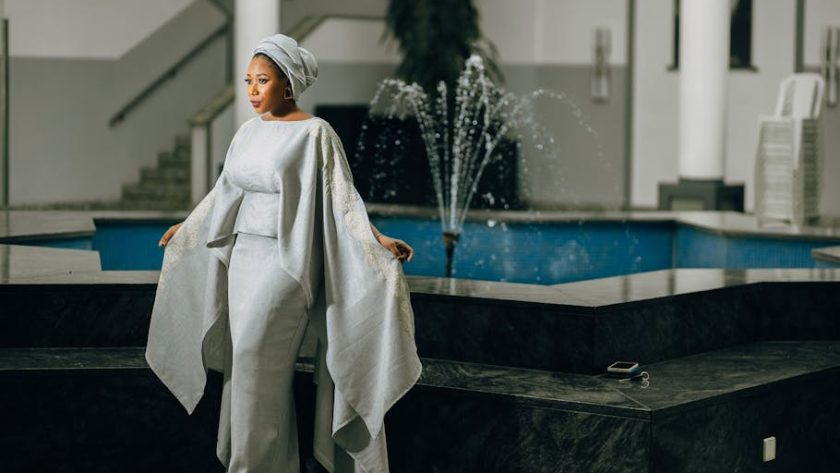
The Safiyaa Hallie Gown (approx. $1,250) is a benchmark in modern evening wear. Constructed from a heavy-weight stretch crepe, it provides an almost sculptural silhouette. The pros are significant: the fabric is thick enough to smooth out lines without the need for aggressive shapewear, and the caped shoulder detail adds a dramatic formal element without being cumbersome. However, the con is the weight. This is a heavy garment. If you are attending an event that requires significant movement or is held in a warmer climate, the density of the crepe can become a liability. It is a dress designed for presence, not necessarily for agility.
Galvan London Pandora Dress Analysis
In contrast, the Galvan London Pandora Dress (approx. $1,050) offers a minimalist approach to formal attire. Made from a high-shine heavy satin, this halter-neck gown relies entirely on the quality of the silk-satin blend to make its statement. The pro here is the timelessness; it is a dress that could have been worn in 1994 or 2026 with equal relevance. The con, however, is the fragility of the fabric. Satin is notoriously unforgiving when it comes to wrinkles and water spots. It requires a level of care that can be stressful during a long evening. If you choose this path, you are trading the structural security of crepe for the fluid elegance of satin.
| Product Model | Approx. Price | Core Material | Best For |
|---|---|---|---|
| Safiyaa Hallie Gown | $1,250 | Heavy Crepe | Structured, high-impact galas |
| Galvan London Pandora | $1,050 | Heavy Satin | Minimalist, sleek evening events |
| Jenny Packham Margot | $3,800 | Tulle/Sequins | Red carpet, maximum visibility |
Selecting the best business formal attire for executive environments
The requirements for business formal are increasingly rigorous as the workplace becomes more casual overall. When everyone else is in chinos, the woman in a perfectly tailored wool suit stands out as the authority in the room. But what constitutes the “best” in this category? It comes down to the “Super” number of the wool and the quality of the canvassing in the jacket. A fused (glued) jacket will eventually bubble and lose its shape, whereas a half-canvas or full-canvas jacket will mold to the body over time. For the executive woman, the investment should always lean toward the latter.
Theory Etiennette Blazer and Treeca Pant
Theory has long been the standard for accessible business formal. The Etiennette Blazer (approx. $495) and matching Treeca Pant (approx. $295) are usually made from their “Good Wool,” which is a traceable Merino wool from Australia. The pro is the consistency; the fit is predictable, and the fabric has a slight stretch that allows for long days in transit or meetings. The con is that Theory designs for a specific, somewhat narrow body type. If you have broader shoulders or a more athletic build, the Etiennette can feel restrictive. It is a “uniform” piece—reliable, professional, but perhaps lacking in the unique character found in higher-tier luxury brands.
The Row Igor Pant and Schoolboy Jacket
At the pinnacle of business formal is The Row. The Igor Pant (approx. $1,200) and accompanying tailored jackets represent an obsession with textile quality. The pros are undeniable: the wool is often a high-twist gabardine that resists wrinkling even after a cross-continental flight, and the tailoring is generous yet precise. The con, obviously, is the price. You are paying a significant premium for the “quiet luxury” aesthetic. Is it worth it? From a researcher’s perspective, if the cost-per-wear is calculated over a decade, the answer is often yes. These garments do not succumb to trends, and their structural integrity remains intact far longer than mass-market alternatives.
Formal attire is not a costume; it is a tool for communication. Whether you are entering a ballroom or a boardroom, the architecture of your clothing signals your understanding of the environment’s gravity.
The role of material science in formal wear selection

We often talk about style, but we rarely talk about fiber. The best formal attire for women is often determined by the microscopic properties of the fabric. For example, why is silk preferred over polyester for evening wear? It isn’t just about the price tag. Silk is a protein fiber that has a natural luster and a unique ability to regulate temperature. Polyester, while more durable and stain-resistant, is a plastic. It does not breathe. If you are in a crowded ballroom under heavy lighting, the difference between a silk gown and a synthetic one is the difference between comfort and a slow-boil.
Wool is another area where data matters. In business formal suiting, you will often see terms like “Super 100s” or “Super 150s.” This refers to the fineness of the wool fibers. The higher the number, the thinner and smoother the fiber. A Super 150s wool suit feels like silk to the touch, but it is also more delicate. For a suit that you intend to wear frequently, a Super 110s or 120s is actually the superior choice because it offers the best balance of luxury feel and structural durability. It is these technical trade-offs that define a truly sophisticated wardrobe.
Understanding Fabric Weights
The weight of the fabric, measured in grams per linear meter (gsm), dictates how a garment will hang. A gown made of 40-momme silk (a measure of silk weight) will have a heavy, liquid-like drape that hides imperfections. A 12-momme silk will be sheer and flyaway. When shopping for the best formal attire, you should physically feel the weight of the hem. If the fabric feels light and papery, it will likely lose its shape before the evening is over. Quality formal wear has a certain gravitational pull.
Essential footwear and accessories for formal dress codes

No analysis of formal attire is complete without addressing the foundation: the footwear. The “best” formal shoe is not necessarily the highest heel, but the one with the most stable pitch. The pitch is the angle at which the foot sits. A poorly designed shoe puts all the pressure on the ball of the foot, leading to fatigue and a compromised gait. In formal settings, where you may be standing for hours, the engineering of the shoe is as important as the dress itself.
Manolo Blahnik BB Pump Analysis
The Manolo Blahnik BB Pump (approx. $725) is frequently cited by stylists as the gold standard for formal footwear. The pro is the design’s balance; the heel is centered under the heel bone, providing more stability than a typical stiletto. It comes in various heights (70mm, 90mm, 105mm), allowing the wearer to choose their comfort level. The con is the narrow toe box. For many women, a full day in a pointed-toe pump is simply not feasible. But in terms of formal aesthetics, it is the most versatile shoe on the market.
The Shift Toward Formal Flats
There is a growing acceptance of formal flats in even the most traditional circles. However, the flat must be as elevated as a heel. This means looking for materials like velvet, satin, or embellished leather. A brand like Jimmy Choo offers pointed-toe flats with crystal detailing (approx. $800) that serve as a legitimate alternative to the pump. The trade-off here is height. If your gown was hemmed for a four-inch heel, switching to flats will cause the fabric to bunch and trip you. Formal attire must be viewed as a system; you cannot change one component (the shoe height) without affecting the others (the hemline).
- Clutches: Look for hard-shell minaudières for black tie; leather portfolios for business formal.
- Jewelry: The rule of “one statement piece” remains the most effective. If you wear a heavy necklace, skip the earrings.
- Hosiery: In business formal, sheer hosiery is making a return for its ability to create a finished, polished look under fluorescent lighting.
Ultimately, the best formal attire for women is the garment that eliminates the wearer’s self-consciousness. When the tailoring is correct, the fabric is appropriate for the climate, and the dress code is respected, the clothing becomes secondary to the woman herself. This requires a shift in perspective: stop looking for the most beautiful dress and start looking for the most well-constructed one. The beauty is a natural byproduct of the quality.