 Michael Chase
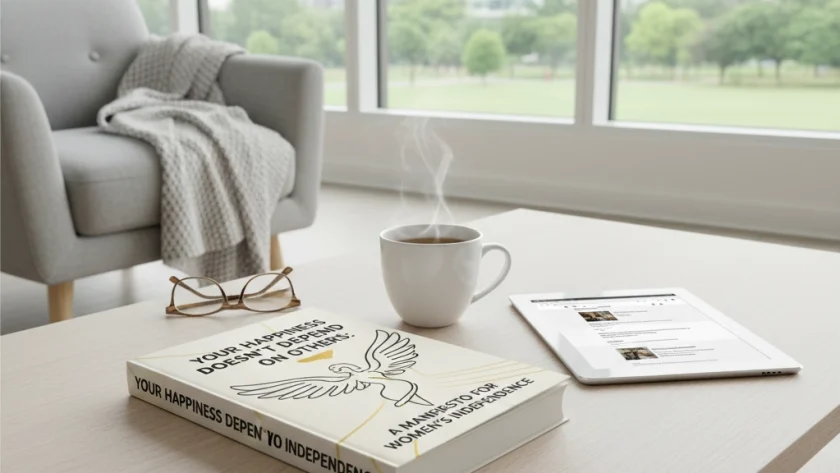
 Here’s the conclusion first: your happiness has a leak. Not because you’re broken, but because most women have been trained — through school, relationships, and the constant feedback loop of social media — to patch uncertainty with other people’s approval. The fix isn’t a mindset hack. It’s a slow, deliberate rebuilding of how you make decisions.
This shows up in fashion as clearly as anywhere else in life. The clothes you choose every morning are one of the most immediate, visible signals of living from your own authority — or performing for an imagined audience. And if you’re honest about it, the line between those two things is blurrier than most of us would like to admit.
Why Your Wardrobe Is a Mirror of Who You Think You Should Be
Fashion gets dismissed as shallow. It isn’t. The way a woman dresses is one of the clearest real-world signals of whether she trusts her own judgment — or whether she’s still waiting for permission to make choices.
Try this: when you picture yourself wearing something you just bought, whose eyes do you see it through first? Yours, or someone else’s? If the first imagined viewer isn’t you, that’s worth sitting with.
How approval-seeking actually shows up in style choices
It rarely looks obvious. It looks like:
- Buying the muted version of something you actually loved in the bold color
- Returning a piece because someone made a face, even though you felt great in it
- Keeping an entire drawer of clothes “for when I lose weight” — meaning, when I deserve to wear these
- Dressing noticeably differently depending on which friend group you’re meeting
Brands like Ganni and COS have built large, loyal customer bases around women who’ve made a specific shift — from dressing as performance to dressing as expression. Ganni’s high-color prints and COS’s stripped-back architectural shapes are opposites aesthetically, but both attract women who’ve stopped asking for permission. That pattern isn’t coincidence.
What dressing for approval actually costs you
When your style is calibrated to external feedback, you lose something concrete: the ability to develop actual taste. Taste isn’t something you’re born with. It builds through hundreds of small choices made with your own reaction as the measuring stick — your discomfort, your satisfaction, your sense of rightness.
Women who dress primarily for others often report a specific kind of emptiness when complimented. The compliment confirms the costume worked. It doesn’t confirm that they made a genuine choice. That gap is the space where independence goes missing.
Reformation started as a sustainable fashion brand but built a community around women describing their purchases as “dressing for the life I want” rather than “the job I have.” That’s not a marketing line. It’s the exact reorientation this piece is about — from external approval to internal coherence.
A practical reset to try this week
Before buying anything new, give yourself 60 seconds with the mirror in total silence. No phone, no asking the friend you came with, no reading product reviews. Just one question: do I like this? Not “will someone else like this on me.” Do you?
Do this consistently for a month. Your shopping behavior will shift more than any style guide produces, because you’ll start mapping your actual responses — to silhouettes, textures, colors — without the filter of imagined judgment running underneath.
Three Patterns That Keep Women Trapped in Others’ Opinions
Independence doesn’t erode overnight. It leaks through patterns so normalized they stop feeling like choices. Here are the three most common — what they look like in daily life, what’s actually happening beneath them, and what they cost.
| Pattern | Daily Behavior | The Underlying Mechanism | The Real Cost |
|---|---|---|---|
| Validation loops | Posting an outfit and feeling anxious until likes arrive; asking “does this look okay?” before leaving the house | You’ve outsourced your comfort signal to others — their reaction tells you how to feel | Your emotional baseline follows other people’s attention span |
| Preemptive shrinking | Choosing the smaller dream, the safer color, the quieter opinion — before anyone has even reacted | You’ve internalized imagined judgment so deeply it sounds like your own voice | You never find out what you actually want, because you pre-edit it away |
| Retroactive editing | Changing your explanation of why you did something based on how it was received | You’re rewriting your own motivations to match what sounds acceptable | You lose the thread of your own decision-making — and start to distrust your own reasons |
Most women experience all three. The goal isn’t eliminating them entirely — it’s recognizing when you’re in one. That recognition is the beginning of real independence, not the absence of these patterns altogether.
Why validation loops are the hardest pattern to break
Instagram’s algorithm rewards posts that generate fast engagement. Your brain learns that posting equals emotional response. The loop becomes: feel uncertain → post → wait → feel temporarily resolved → repeat. What makes this particularly sticky is that it works — just not in the way that builds anything lasting. Borrowed certainty evaporates and needs constant refilling. Internal certainty compounds. Those two trajectories look identical at week one and completely different at year three.
How to Actually Rebuild Your Independence, Step by Step
Most writing on this topic stays at the level of “believe in yourself.” Here’s the concrete version — what to actually do, in sequence.
Step 1: Track where you currently seek permission
For one week, note every time you ask someone else for validation — “does this look okay?”, “am I overreacting?”, “what would you do?” — and every time you wait for someone to react before deciding how you feel about something. Don’t judge it. Count it.
Most women are surprised. The frequency is higher than expected, and it usually clusters around specific people or situations — wherever the woman has the least practiced confidence in her own judgment.
Step 2: Make one daily decision without consulting anyone
Small choices only. What to eat. What to wear. Which route to take. Make the decision, live with it, and don’t report it to anyone or seek feedback afterward.
This sounds too minor to matter. It isn’t. The practice of completing a decision — from “I want X” through “I chose X” to “I lived with X and it was fine” — is how internal confidence actually builds. Not through affirmations. Through repetition of small, completed internal loops.
Step 3: Identify one borrowed opinion in your wardrobe
Most women have at least one zone of their wardrobe shaped entirely by someone else’s preference — a partner’s offhand comment about color, a friend’s aesthetic gradually absorbed, a workplace dress code internalized well beyond what it actually requires.
Name it. Then, once — just once — buy or wear something that goes against it. Not to prove a point. To see what it feels like to make a choice on your own authority, with no justification prepared in advance.
Brands like Universal Standard (sizes 00-40, starting around $70 per piece) and Girlfriend Collective (activewear, $68-$158) have built their entire models around women dressing for function and fit rather than external ideals. These aren’t just brand values — they’re practical frameworks for making more internal choices about what “right” even means for your body and your life.
Step 4: Build a certainty baseline
Write down five things you know to be true about yourself — actual preferences or observed facts — that don’t require anyone else’s agreement. Not aspirational statements. Real things you know from evidence. “I work better before noon.” “Loud restaurants exhaust me.” “I feel most like myself in wide-leg trousers.”
This list is your baseline. When you’re uncertain and reaching for external input, come back to it. It won’t answer every question. It will remind you that you already have an internal compass — you’ve just been consulting other people’s instead.
Step 5: Let outcomes settle before you interpret them
When something goes well or badly, resist reaching for your phone or calling someone to process it immediately. Sit with your raw reaction for a few hours. Let yourself know what you feel before adopting someone else’s framing.
Most of us reach for external perspective so reflexively it feels like a basic need. But that window — between experience and interpretation — is where your own authority lives. Use it deliberately.
Independence Isn’t Isolation — Here’s the Line That Matters
Wanting to stop depending on others for your happiness doesn’t mean cutting people out or refusing input entirely. It means building a self that can be in relationships without being governed by them — where connection is chosen, not clung to for structural support.
Needing people is human. Needing their ongoing approval to feel okay about your own choices is a different thing entirely. One is warmth. The other is a load-bearing wall you borrowed from someone else’s house.
What Dressing for Yourself Actually Looks Like
Dressing for yourself is not wearing whatever you want with zero social awareness. That’s a common misread — and acting on it usually just swaps one audience for another.
Dressing for yourself means your starting point is internal. What do I feel like today? What does this body actually need? What does this context call for — not what will make me look agreeable, but what makes sense given the reality I’m walking into? You’re choosing within the real world, not performing for it.
What it doesn’t look like
It doesn’t look like wearing a sequined blazer to a job interview to prove you don’t follow rules. That’s not independence — that’s performing independence for an audience, which is still organized entirely around external reaction, just in opposition instead of compliance. The tell is that the choice is still built around imagined eyes.
Real independence in style is quieter. It’s buying the wide-leg trouser from Arket (~$90) because you know from years of wearing similar cuts that they work for your body and your pace. It’s keeping the vintage jacket from a thrift store because it feels specifically like you, regardless of whether any current trend validates it. It’s wearing the same five combinations on rotation because you know what works — and that’s genuinely enough.
The failure mode most women don’t catch
The most common mistake: confusing aesthetic conformity with independence. Wholesale adopting a trend — quiet luxury, coastal grandmother, old money — and calling it self-expression. These frameworks can be useful starting points, but if your entire wardrobe is assembled from a mood board built by an algorithm that doesn’t know you, you haven’t found your style. You’ve found a more curated form of seeking approval.
Genuine style independence looks like knowing what you want before you open the app. It looks like buying Lemaire trousers ($390) because you’ve worn similar shapes for a decade and know they’re yours — not because they appeared in a roundup that week. The source of the preference matters enormously. Borrowed taste and developed taste look identical from the outside. They feel completely different when you’re the one wearing them.
The long-term result
Women who’ve genuinely built this — and they exist everywhere, at every income level and age — have wardrobes that are identifiable without being dramatic. You can see the same person across different contexts. Their work outfit and their weekend outfit and their dinner outfit all feel like the same woman chose them. That coherence only comes from years of decision-making that was genuinely internal.
That’s the actual goal. Not a capsule wardrobe formula. Not a signature look you perform. A relationship with your own choices that’s stable enough to produce coherence without effort — because it’s coming from somewhere real.
The fashion industry will always produce new frameworks for what to want. The women who navigate it with the most ease are the ones who already know what they want before they walk in.