 Michael Chase
You have ten minutes before a client meeting, and the outfit on your bed looks polished in separate pieces but flat together. That problem usually comes from proportion, not a lack of expensive clothes. A power outfit works when the jacket, trousers, color, and shoes send the same message: prepared, capable, and comfortable enough to move through a long day.
The strongest combinations do not copy a corporate uniform. They use structure with one softer or more personal detail. The result feels intentional without looking staged.
What makes a power outfit look professional?
The best power outfits begin with clear lines. A shaped blazer gives the shoulders definition, trousers create a clean vertical line, and shoes finish the silhouette. The outfit should look balanced from a distance before anyone notices the label.
| Outfit element | Reliable specification | Why it works |
|---|---|---|
| Blazer | Single-breasted, two-button, lightly structured shoulder | Creates shape without making the outfit look stiff |
| Trousers | Mid- or high-rise waist with a full-length hem | Extends the leg line and keeps the outfit modern |
| Top | Matte silk, fine knit, or crisp cotton | Adds texture without competing with the tailoring |
| Shoes | Pointed toe, almond toe, or low square toe | Supports a polished finish without requiring a high heel |
| Color | Two neutrals plus one controlled accent | Keeps the outfit memorable but easy to coordinate |
The strongest base is a fitted jacket and relaxed trouser
A close-fitting blazer with a slightly wider trouser leg gives the body contrast. The jacket defines the upper half while the trouser creates movement below. This pairing looks more current than a tight jacket worn with equally narrow pants, which can feel dated and restrictive.
Professional does not mean severe
Replace one hard element with softness. Try a fine merino sweater under a sharp jacket, a satin shell with matte trousers, or a leather loafer instead of a rigid pump. For most offices, this balance produces a more believable power outfit than wearing a full suit with a stiff shirt and formal heels.
How to build a power outfit from three pieces

Fit comes before trend. A simple outfit that fits at the shoulders, waist, and hem will look more authoritative than a fashionable outfit that pulls or bunches.
- Choose one structured anchor. Start with a blazer, tailored vest, or long coat. Check the shoulder seam first. It should sit near the edge of your shoulder without collapsing toward your arm.
- Add one long line. Pick straight-leg or wide-leg trousers, a column skirt, or a dress that falls in one uninterrupted shape. The garment should skim rather than cling.
- Control the contrast. Pair navy with cream, charcoal with pale blue, camel with black, or espresso with ivory. Strong contrast looks deliberate; random contrast looks accidental.
- Repeat one detail. Match the warmth of your belt hardware to your earrings, or repeat the color of your shoes in a bag or narrow scarf. One repeated detail is enough.
- Test the sitting position. Sit, reach forward, and raise both arms before leaving home. If the jacket strains across your back or the trousers pull at the waist, the outfit will not feel powerful for long.
The three-piece formula that works most often
Use a tailored blazer, a simple knit top, and high-waisted trousers. This formula handles meetings, presentations, and office dinners because each piece can shift the tone. A silk shell makes it sharper. A crew-neck sweater makes it approachable. A white shirt makes it more traditional.
When a full suit is the wrong choice
Do not force a matching suit into a creative studio, informal interview, or warm-weather office if the dress code does not support it. A blazer with trousers in a related but different fabric often looks more confident because it shows judgment. The clear winner for flexible professional dressing is a coordinated separates outfit.
Which professional outfit combinations work best?
For most women, the best power outfit is a defined blazer, a fluid trouser, and a low-profile shoe. It creates authority without making movement difficult. These five combinations cover different levels of formality and body proportions.
1. Navy blazer, ivory knit, and charcoal trousers
This is the safest choice for a presentation or first client meeting. The navy blazer creates focus around the face, while the ivory top keeps the outfit from looking heavy. Charcoal trousers soften the contrast between navy and black shoes. The Theory Good Wool Etiennette Blazer is a useful reference for this shape: one button, a defined waist, and a clean wool construction. Pair that structure with a full-length straight or wide-leg trouser.
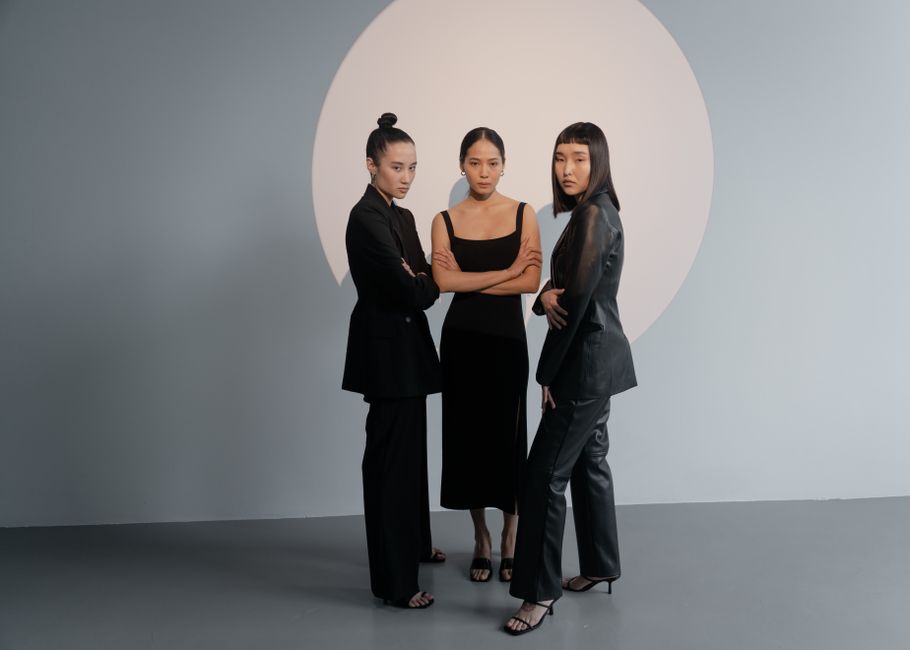
2. Monochrome black with a lighter shoe
Black trousers, a black knit, and a black blazer create a strong vertical line. To stop the outfit from looking flat, mix textures: matte crepe trousers, a ribbed knit, and a smooth blazer. A tan, burgundy, or metallic shoe breaks up the block of color. The Aritzia Agency Blazer offers a good reference for a slightly relaxed double-breasted shape, but keep the rest of the outfit simple so the jacket remains the focal point.
3. Camel blazer, white shirt, and dark denim
This combination works when the workplace allows polished denim. Choose dark, rigid denim with no fading, a pointed loafer, and a crisp shirt tucked at the waist. The contrast between camel and white looks warm rather than formal. This is the best option for a creative office or travel-heavy workday because the blazer carries the authority while denim adds comfort.
4. Tailored vest, wide-leg trousers, and slingbacks
A matching vest and trouser set gives the power suit a lighter, more modern shape. Keep the vest long enough to cover the waistband and choose trousers that break once over the shoe. COS Wide-Leg Tailored Trousers are a useful style reference for the fluid leg line. Slingbacks keep the outfit refined without adding the stiffness of a traditional pump.
5. Column dress, belt, and structured jacket
For days when trousers feel repetitive, wear a simple midi dress under a blazer. Add a narrow belt only if the dress needs waist definition. The dress should not compete with the jacket through large prints or excessive draping. This combination is the clear choice for conferences and dinners because it moves from daylight to evening with one shoe change.
Power outfit questions answered
Can a power outfit include color?
Yes, but keep the shape restrained. Cobalt, burgundy, forest green, and saffron work well as one strong element against navy, charcoal, cream, or black. A bright suit with a bright blouse and bright shoes creates too many focal points. The better approach is a colored blazer with neutral trousers, or a colored trouser with a quiet jacket.
What should you wear when heels are uncomfortable?
Choose a pointed flat, a low block heel, or a sleek loafer with a firm sole. Comfort does not reduce authority; constant shoe adjustment does. A shoe with a clean upper and minimal decoration usually looks more professional than a tall heel that changes your posture. Test the shoes on stairs and hard floors before wearing them to a long meeting.
How should a power outfit fit a petite frame?
Keep the jacket hem near the high hip, avoid excessive shoulder padding, and choose trousers that end just above the floor. A cropped jacket can make the legs look longer when worn with a high rise. Very long blazers can overwhelm a petite frame unless the rest of the outfit is monochrome.
The best power outfit for your workday
Choose the navy blazer, ivory knit, and charcoal trouser combination when you need one dependable answer. It works across formal and business-casual settings, photographs well, and allows small changes without rebuilding the outfit.
For a stricter office, swap the knit for a white cotton shirt and choose a leather pump or polished loafer. For a creative workplace, replace the charcoal trouser with dark denim or use a textured vest instead of the blazer. For travel, select wrinkle-resistant wool, ponte, or compact crepe and keep the shoe under a three-inch heel.
The mistakes are predictable: buying a jacket with shoulders that do not sit correctly, pairing wide trousers with an oversized jacket, wearing too many statement accessories, and ignoring the dress code. A power outfit should make your work easier, not demand constant adjustment.
The strongest final test is simple. Can you sit, walk, carry a bag, and speak without thinking about your clothes? If the answer is yes, the outfit has done its job.


